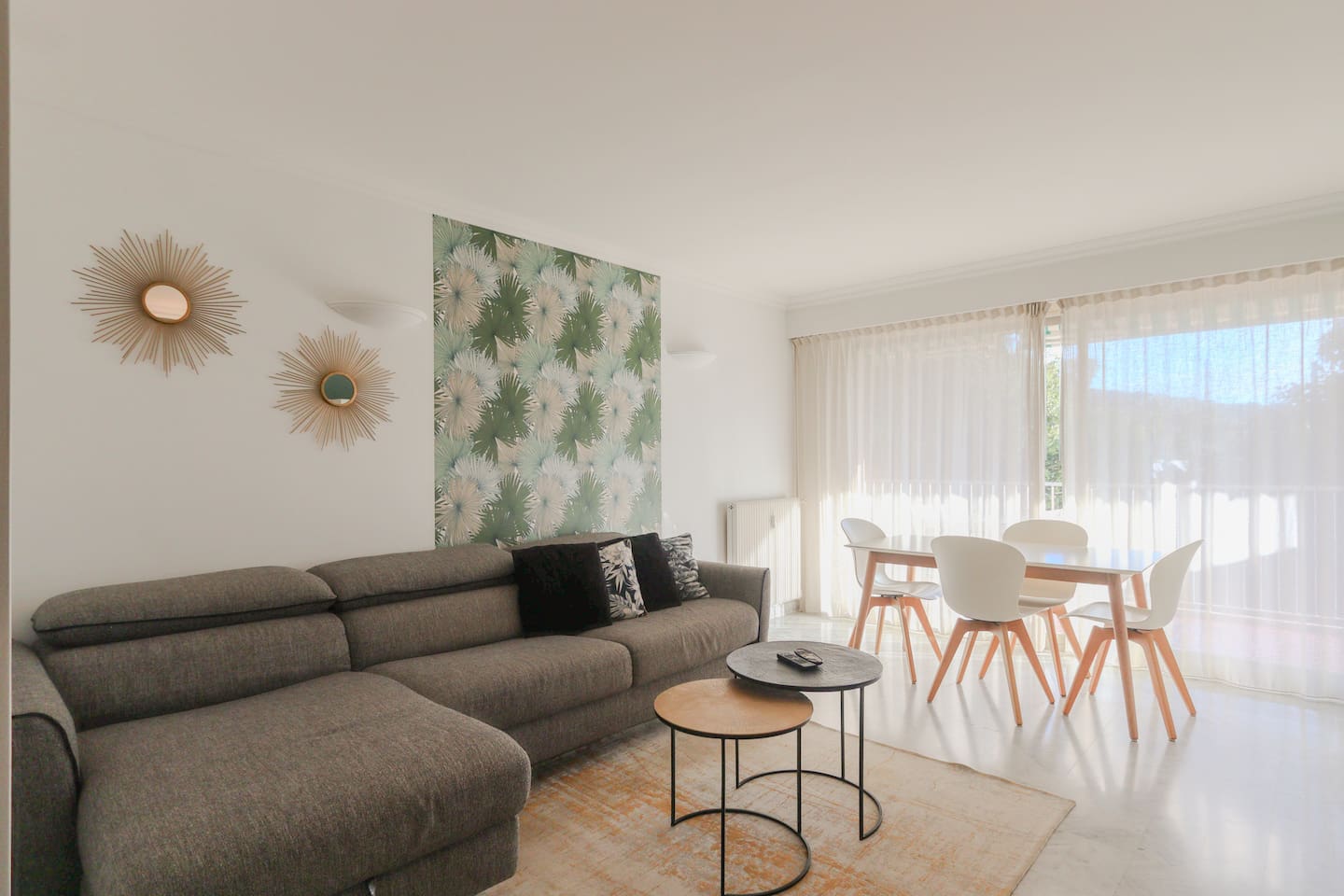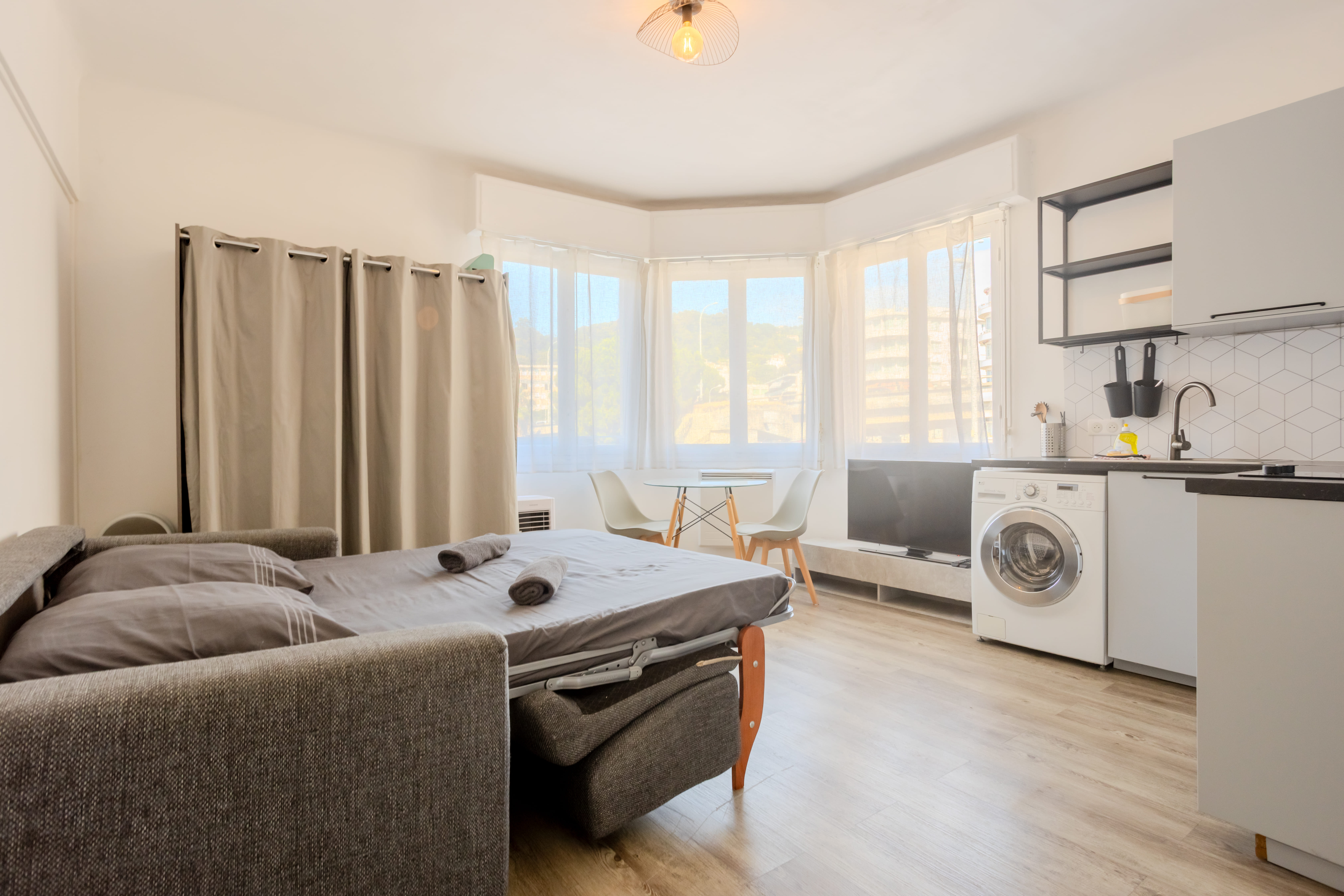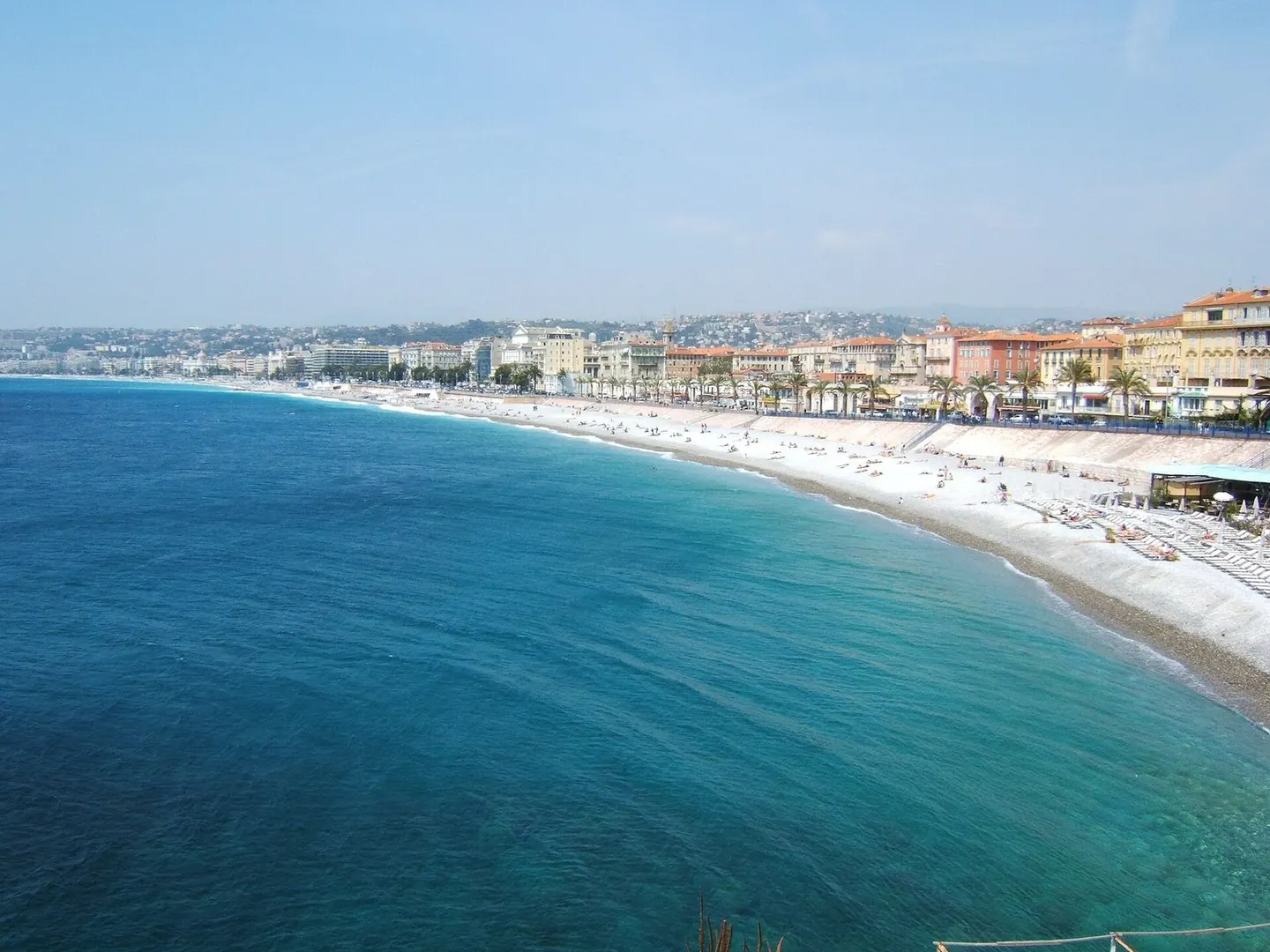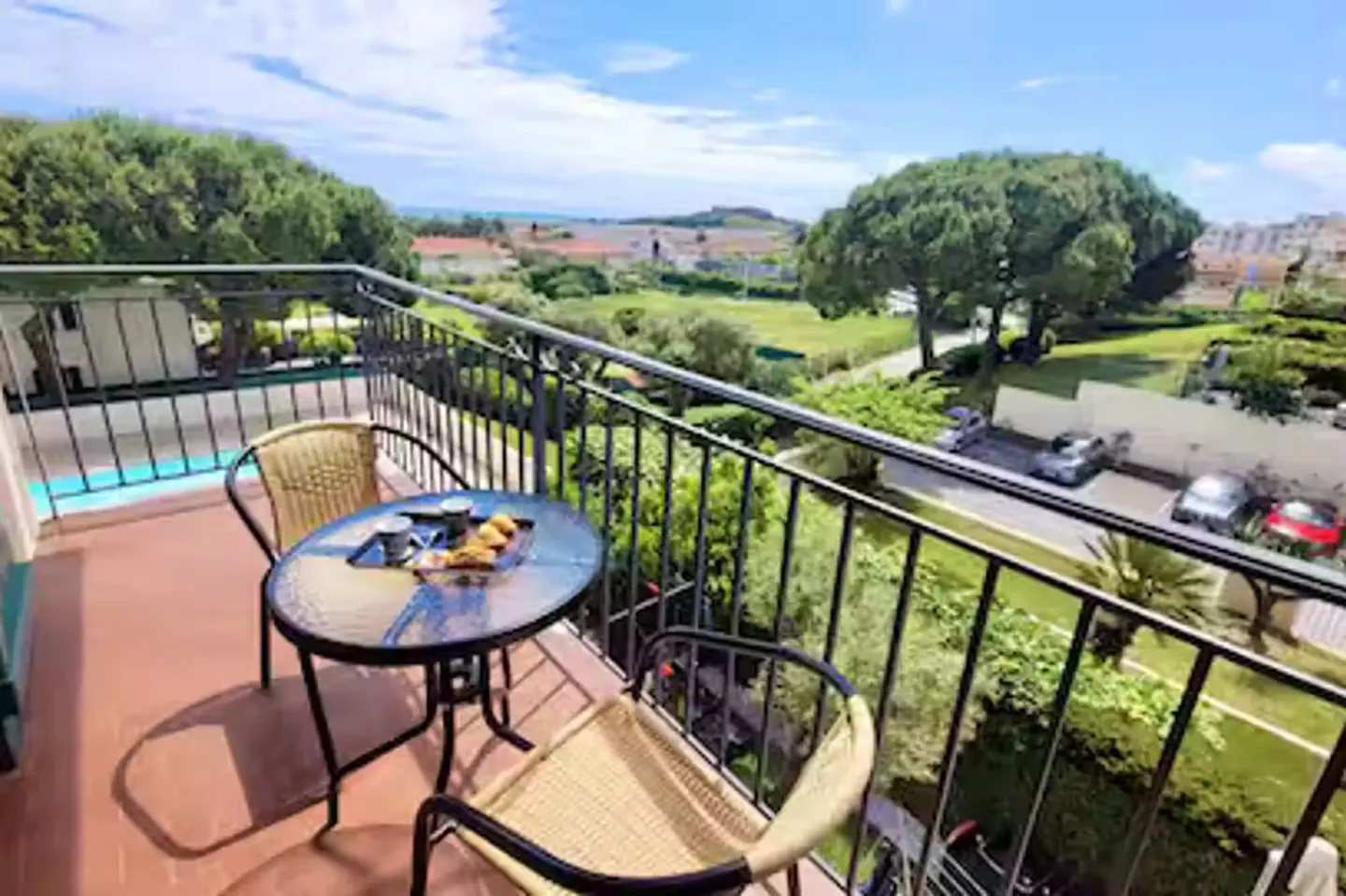
You own an apartment on the French Riviera and can't decide: should you let it by the night, Airbnb-style, or sign a standard one-year lease with a long-term tenant? It is the first question most owners we work with in Nice, Antibes and Cannes ask us. The honest answer fits in one sentence: holiday letting almost always earns more net income, but it takes more management and you must follow local rules that are getting stricter. The key is to compare the two on the right criteria: income, empty periods, costs, tax and risk. This article puts the figures side by side, with no empty promises, then explains the option that often gives you the best of both: holiday letting in summer plus a student lease the rest of the year.
The two options in a nutshell
First, some definitions. These are two different business models, each with its own logic, its own type of occupant and its own constraints.
Long-term letting (standard unfurnished or furnished lease)
You sign a long lease (3 years unfurnished, 1 year furnished) with a tenant who lives in the property as their main home. You receive a fixed, predictable monthly rent, which is capped in some high-demand areas. There is very little for you to do: a check-in inventory, the odd service-charge adjustment, and the property more or less runs itself. The trade-off is that the rent can never exceed the local long-term market rate, and the property is out of your hands for the whole lease.
Holiday letting (short-term)
You let by the night or the week to visitors: tourists, business travellers, conference delegates. The nightly rate is in a different league from a monthly rent divided by thirty, but the calendar is never 100% full, running costs are high (cleaning, linen, platform fees, energy) and the activity is now tightly regulated. It brings in high income but needs close management. For a closer look at the returns, our article how much a holiday let earns on the French Riviera gives ranges by town and property type.
Side by side: the comparison table
Here is a head-to-head comparison, point by point, for a typical one-bedroom apartment in Nice (40 m², well located, air-conditioned). The figures are ballpark numbers from our own portfolio and the local market, not guarantees.
| Criterion | Holiday letting | Long-term letting |
|---|---|---|
| Gross annual income | ~38 000 à €43,000 | ~12 000 à €14,000 |
| Estimated net income | ~20 000 à €22,000 | ~9 000 à €11,000 |
| Costs & management | High (25 to 50% of gross) | Low (10 to 20% of gross) |
| Vacancy | Built-in (15 to 30% of the calendar) | Low with a good tenant, costly between tenants |
| Time / involvement | High, unless you delegate | Very low |
| Income stability | Variable, seasonal | Stable and predictable |
| Risk of unpaid rent | Almost none (paid upfront) | Real (unpaid rent, long legal process) |
| Access to the property | Flexible (personal use possible) | Tied up for the whole lease |
| Tax | LMNP, depreciation under régime réel | Property income (unfurnished) or LMNP (furnished) |
| Regulation | Regulated: declaration, registration number, quotas by town | Standard, few restrictions |
The verdict is clear: holiday letting can double or even triple your net income, in return for more management and a set of rules to follow. But each line deserves a closer look, because averages hide important differences.
1. Income: up to three times as much
This is where the difference is most striking. Take our one-bedroom apartment in Nice again. As a furnished long-term let, it fetches around €1,000 to €1,150 a month, or €12,000 to €14,000 in gross income a year. As a holiday let, our Nice properties earned a median of around €3,650 gross per summer month in 2026 (June to August, "Saison 2026 Azur" report, Lodgify), before fees and costs; the rest of the year is quieter. Full details in how much a holiday let earns.
The gap comes down to simple leverage: with a long-term let you sell months, with a holiday let you sell nights, at a much higher price per unit. Even after the higher costs and empty nights, holiday letting comes out well ahead on net income. On the French Riviera, a well-run holiday let generally earns more than a long-term one, and the gap widens further for well-located, well-kept properties.
One caveat: this advantage depends on good occupancy. A half-empty, badly priced calendar can drag holiday letting down to long-term levels. The quality of management is not a detail; it is what makes or breaks the numbers.
2. Empty periods: two very different risks
People often set the security of long-term letting against the ups and downs of holiday letting. The reality is more nuanced, because empty periods look very different in each model.
With holiday letting, some empty nights are built in: no calendar is ever 100% full. In summer 2026, the properties we managed for the whole season were booked on 84% of nights. The other 15 to 30% are unsold nights, mostly between November and February. But these gaps are spread out across the year and never catastrophic. You never lose several months in one go.
With long-term letting, empty periods are rare but they hit hard. As long as your tenant stays, the rent keeps coming in. But when they leave, you may face one to three months without income while you find someone new, plus the cost of refreshing the property and finding a tenant. And if the rent goes unpaid, eviction can take many months, with nothing coming in. Long-term voids happen less often, but each one hurts more.
3. Costs and management: the downside of holiday letting
This is where long-term letting wins back ground. A standard lease takes a few hours of management a year. A holiday let is a small hospitality business: welcoming guests, cleaning after every stay, linen, restocking supplies, fixing things quickly, managing listings and pricing, and answering messages within minutes.
On costs, running a holiday let swallows 25 to 50% of gross income, against 10 to 20% for a long-term let. A typical breakdown for a holiday let:
- Platform fees (Airbnb, Booking): around 15% of nightly revenue
- Cleaning and linen: €4,000 to €5,000 a year for a property with frequent turnovers
- Energy, water, internet: paid by you (with a long-term let, the tenant pays the utilities)
- Supplies, minor repairs, faster wear and tear: a busy property wears out more quickly
- Holiday rental management: if you delegate
Taking this workload off your hands is exactly what holiday rental management is for. At Azur Hébergements, our commission is 20% of rent collected, excl. VAT (24% incl. VAT) for holiday letting, all inclusive: you receive an optimised net income without lifting a finger. To see whether handing over is worth it, our article is an Airbnb management company worth it? works out the return on investment, and our all-inclusive holiday let management page sets out what is covered.
A free, tailored estimate in 2 minutes, with no obligation.
4. Tax: furnished letting comes out ahead
Tax rarely settles the question on its own, because short-term and long-term furnished lets often fall under the same status: LMNP (loueur en meublé non professionnel, non-professional furnished letting status). Under the régime réel (actual expenses regime), this status lets you depreciate the property and its furniture, which can sharply cut the tax on your rental income for years.
Unfurnished letting, by contrast, is taxed as property income (revenus fonciers), which is generally less favourable because you cannot depreciate anything. That is a point in favour of furnished letting, whether holiday or long-term.
A word of caution: the tax regimes (micro-BIC, the flat-rate allowance scheme, or réel), thresholds, allowances and filing obligations change regularly and depend on your personal circumstances. We deliberately give no thresholds here: out-of-date information, or information that does not fit your case, can be costly. Choosing the best regime (micro-BIC or réel, whether depreciation is worthwhile, the impact on your other income) is something to confirm with your accountant before you decide. The tax you save will far outweigh the cost of the advice.
5. Risk and regulation
Here, the two options carry opposite risks.
Rental risk favours holiday letting: guests pay upfront, unpaid rent is almost unheard of, and the quick turnover limits the damage a bad occupant can do. With a long-term let, unpaid rent is a real risk, and eviction is slow and costly.
Regulatory risk, on the other hand, favours long-term letting, which has few restrictions. Holiday letting is now tightly regulated, and this is the one thing an owner in Nice must look into before starting out.
In Nice, the rules changed on 1 January 2026:
- Main residence: you can let to short-stay guests without applying for change of use, as long as the total does not exceed 120 days a year (metropolitan regulation of 22 June 2026). You still need to declare the let at the town hall (registration number) and charge the tourist tax (taxe de séjour).
- Second home: a change-of-use authorisation is required from the very first night. It is valid for 5 years and, depending on your area, subject to a quota.
- Quota areas: some districts (Vieux Nice, Port, Centre-Ville, Ouest) cap the number of authorisations granted each year. Applications are made online during a set window at the start of the year.
These rules vary from town to town and change over time: always check with the Métropole Nice Côte d'Azur and your accountant. The good news is that this framework opens the door to a third option, designed to give you the best of both worlds.
The hybrid option: the best of both worlds
What if you did not have to choose? The approach we recommend to many owners on the French Riviera is to combine both models over the year: holiday letting in summer, and a student or mobility lease for the rest of the year.
How the hybrid works
The idea is simple and follows the Riviera's two seasons:
- June to August (or July to September): holiday letting at the height of the tourist season, when nightly rates peak. These months bring in a large share of the year's revenue.
- September to May: a bail mobilité (French furnished mobility lease, 1 to 10 months) or a student lease, housing a student or a professional on a temporary move (assignment, internship, work-study placement) during the academic year.
Nice has a huge student population: Université Côte d'Azur, SKEMA, EDHEC, Campus Valrose, IUT Nice, Pôle Saint-Jean-d'Angély. Around Antibes and Valbonne, the Sophia Antipolis tech park creates strong demand for medium-term housing (engineers, interns, researchers). There is no shortage of tenants for the long low season.
Why the hybrid often comes out on top
You get the best of both: you capture the summer peak (in 2026, a one-bedroom apartment in Nice earned a median of around €3,650 gross per summer month, well above a long-term rent), while locking in a steady income with little management from September to May. The winter gaps of a holiday let disappear, replaced by a guaranteed monthly rent. And in Nice, mixed letting (9 months to students + 3 summer months to tourists) is expressly allowed by the regulations, subject to the agreements signed with the City and the Métropole.
The mobility lease, which usually covers the low season, has its own advantages: it runs for 1 to 10 months, cannot be renewed, requires no deposit and is for tenants on a temporary move. You get the property back at the end, ready for the tourist season. We cover it in detail in the mobility lease explained.
The hybrid is also the most affordable in commission terms: at Azur Hébergements, the mobility / student lease part starts from 8% excl. VAT, against 20% excl. VAT for holiday letting. You only pay the holiday letting commission in the months when it adds the most value. Our student letting and mobility lease page explains how it all works.
Which option suits your property?
There is no one-size-fits-all answer: the right choice depends on your property, its location and your goals. Here is an honest guide.
- Go long-term if you want total peace of mind and a predictable income with no management at all, or if your property is in an area where short-term letting is capped by quotas and hard to get authorised.
- Go for holiday letting only if your property is in a prime spot (city centre, seafront, near the Palais des Congrès), eligible for short-term letting, and you want maximum income, with management handed over so it does not take up your time.
- Go hybrid if you want the best balance: capture the summer peak without the winter gaps, secure a low-season income and stay comfortably within the rules. It is our speciality, and the option that suits most Riviera owners.
Conclusion: compare using your own figures
To sum up: on net income, holiday letting comfortably beats long-term letting, often by two to one on the French Riviera, in return for more management and rules to follow. Long-term letting keeps the edge on simplicity and steady income. But for many owners the real answer is neither: it is the hybrid, combining premium summer holiday letting with a student or mobility lease from September to May, for high income, stability and compliance.
Don't rely on averages: your property has its own figures, location and potential. See what yours could earn with our income simulator, then ask for a free, personalised estimate. Anthony and Laura will look at your property and give you an honest net income projection for each option (holiday letting, long-term or hybrid), with no obligation. It is the simplest way to find out, with real figures, which strategy will make your property earn the most.
Find out more about our all-inclusive holiday letting and our rental management in Antibes.