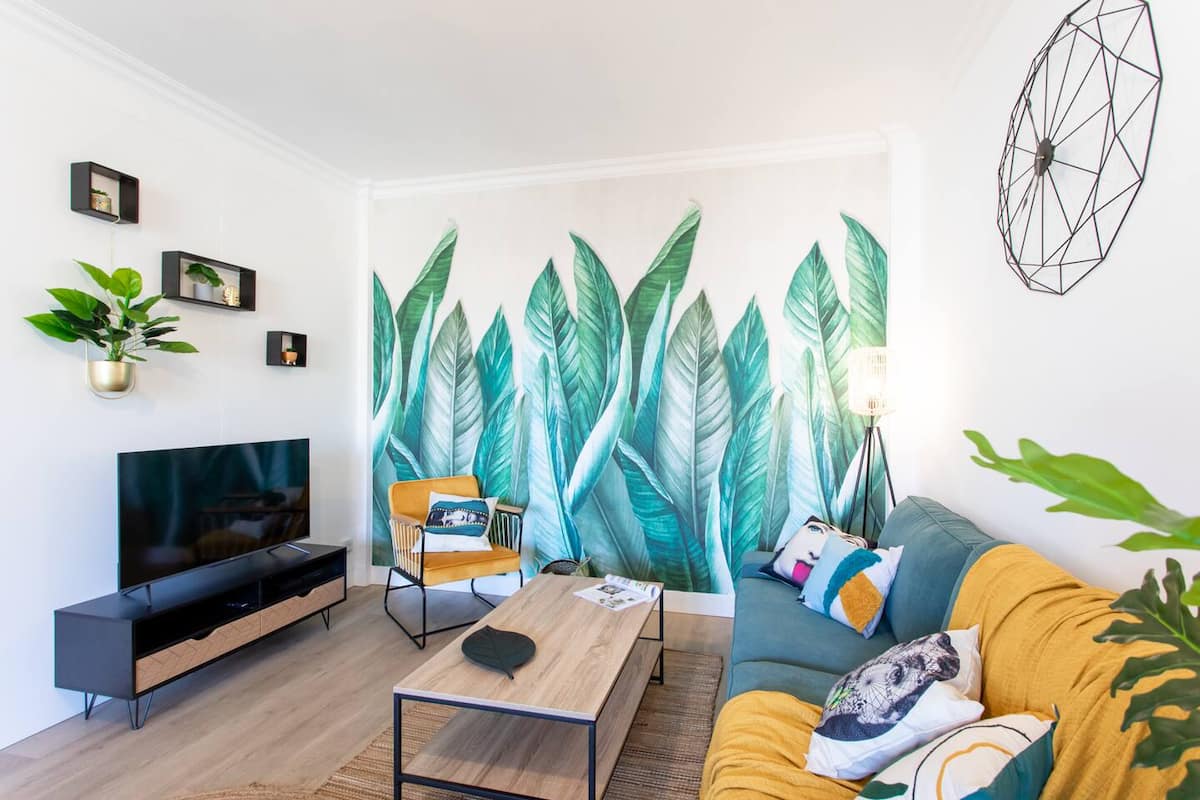
An Airbnb listing works just like a web page: if nobody sees it, it earns nothing. To be seen, it has to rank well, which means appearing near the top of Airbnb and Booking search results. Most owners do not realise it, but these platforms rank listings with an algorithm, just as Google does. Polishing your listing is not just about making it look nice: it is proper search optimisation, aimed at winning as much visibility, and so as many bookings, as possible. As a holiday rental management company founded by an SEO specialist, that is exactly how we approach every property. Here is our full guide to turning your listing into a booking machine: title, photos, description, keywords, reviews and platform signals. The aim is simple: an optimised listing gets booked more often, at better prices, all year round.
Your Airbnb listing is SEO
Airbnb and Booking do not show listings at random. Their search engines rank properties on dozens of criteria to show each guest the results most likely to lead to a booking. It works exactly like a web search engine: relevance (does your listing match the search?), quality (photos, description, amenities) and performance (booking rate, reviews, responsiveness). Improve these signals and your listing climbs; every place it gains means more views, and more bookings.
In other words, optimising a listing takes a specific skill: SEO. It is the speciality of Anthony, co-founder of Azur Hébergements, and it is why we treat every property the way we would treat a web page we want to rank. The sections below cover each lever, from the most visible to the most technical.
The title: your most important tag
The title is the first thing guests see, and one of the factors the algorithm weighs most. In web SEO terms, it is your title tag: it needs to be appealing to people and full of useful information for the search engine. A few practical rules:
- Lead with your best features: “sea view”, “terrace”, “near the beach”, “town centre”, “parking”. These are what guests search for and look out for first.
- Be specific and say where it is: “Studio with terrace, 5 min from the Promenade des Anglais” beats “Lovely cosy studio” every time.
- Work in a search keyword without stuffing: the property type, the neighbourhood, a stand-out feature.
- Cut the clutter: shouty capitals, a string of emojis and empty superlatives (“incredible”, “stunning”) add nothing and can put people off.
| Weak title | Optimised title |
|---|---|
| Beautiful apartment in Nice | 1-bed with terrace, 5 min from the Promenade des Anglais |
| Cute studio, central Cannes | Air-conditioned studio near the Croisette and Palais des Festivals |
| Pleasant home in Antibes | 2-bed, sea view, parking, heart of Vieil Antibes |
Photos: what wins the booking
If the title wins the click, the photos win the booking. They are by far the biggest driver of bookings on any listing, and the algorithm knows it: better click-through and booking rates push your property up the rankings. The golden rules:
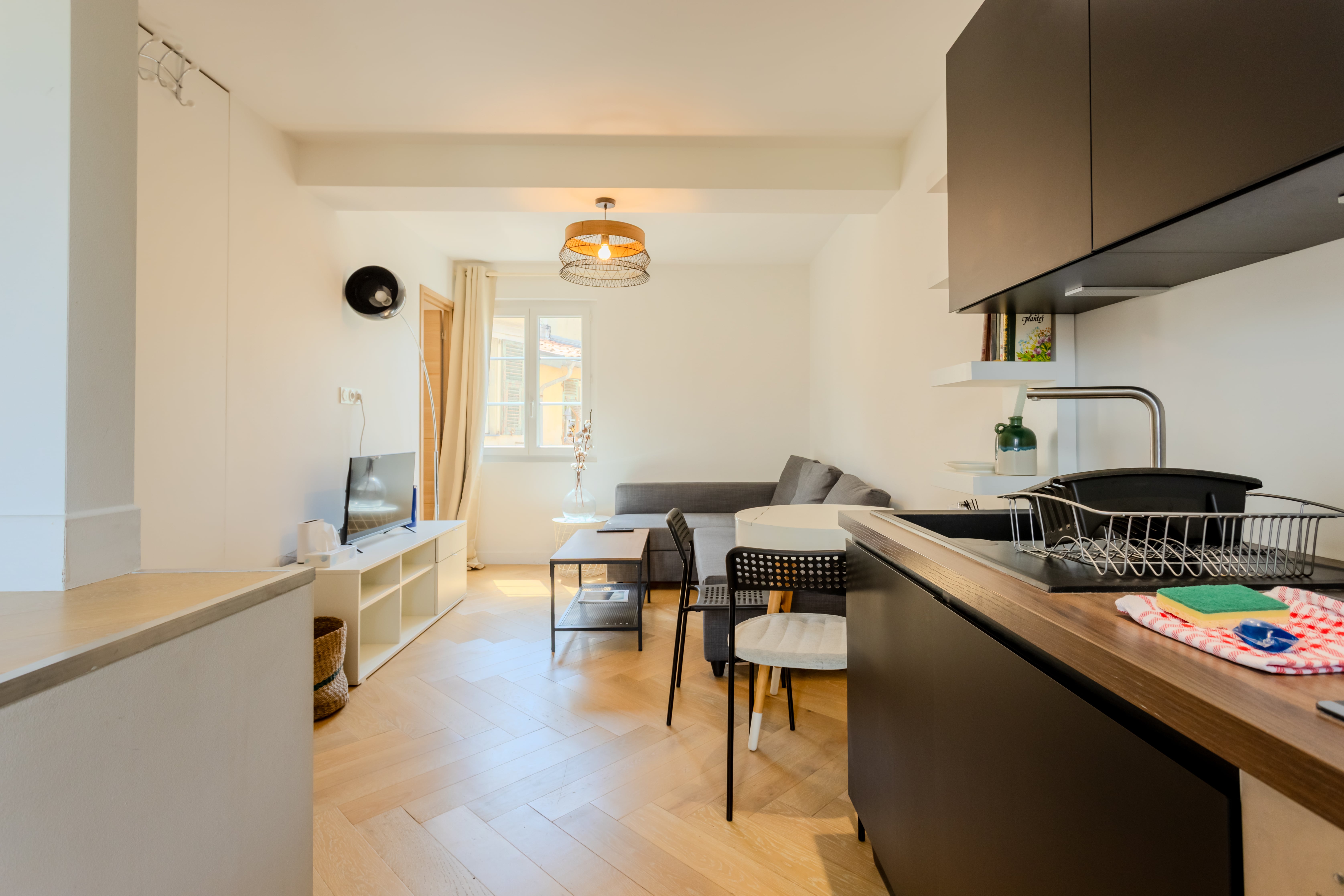
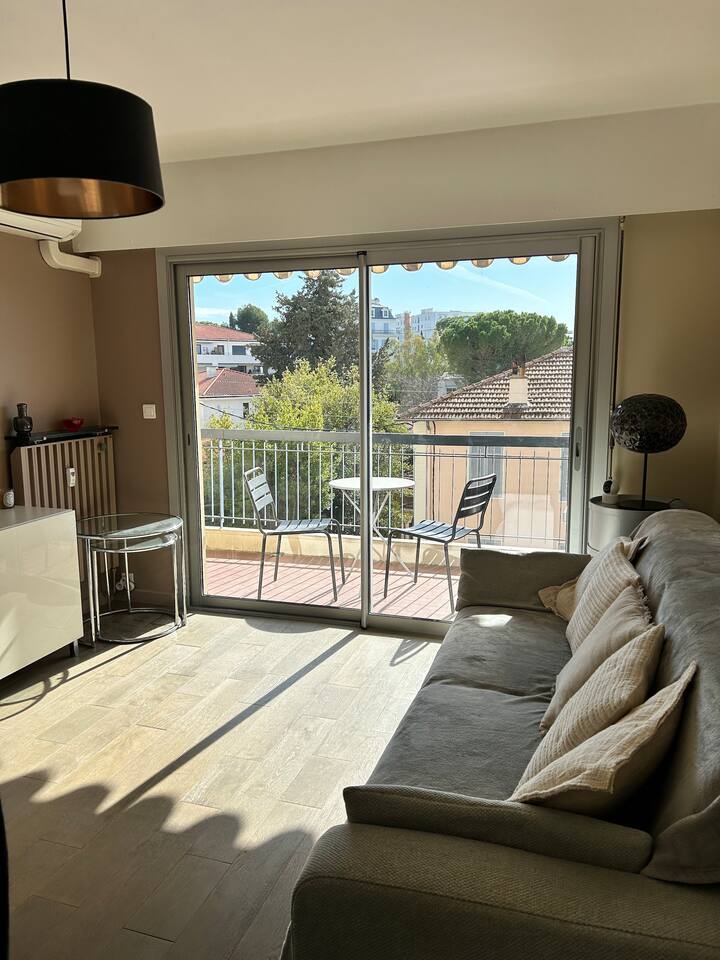
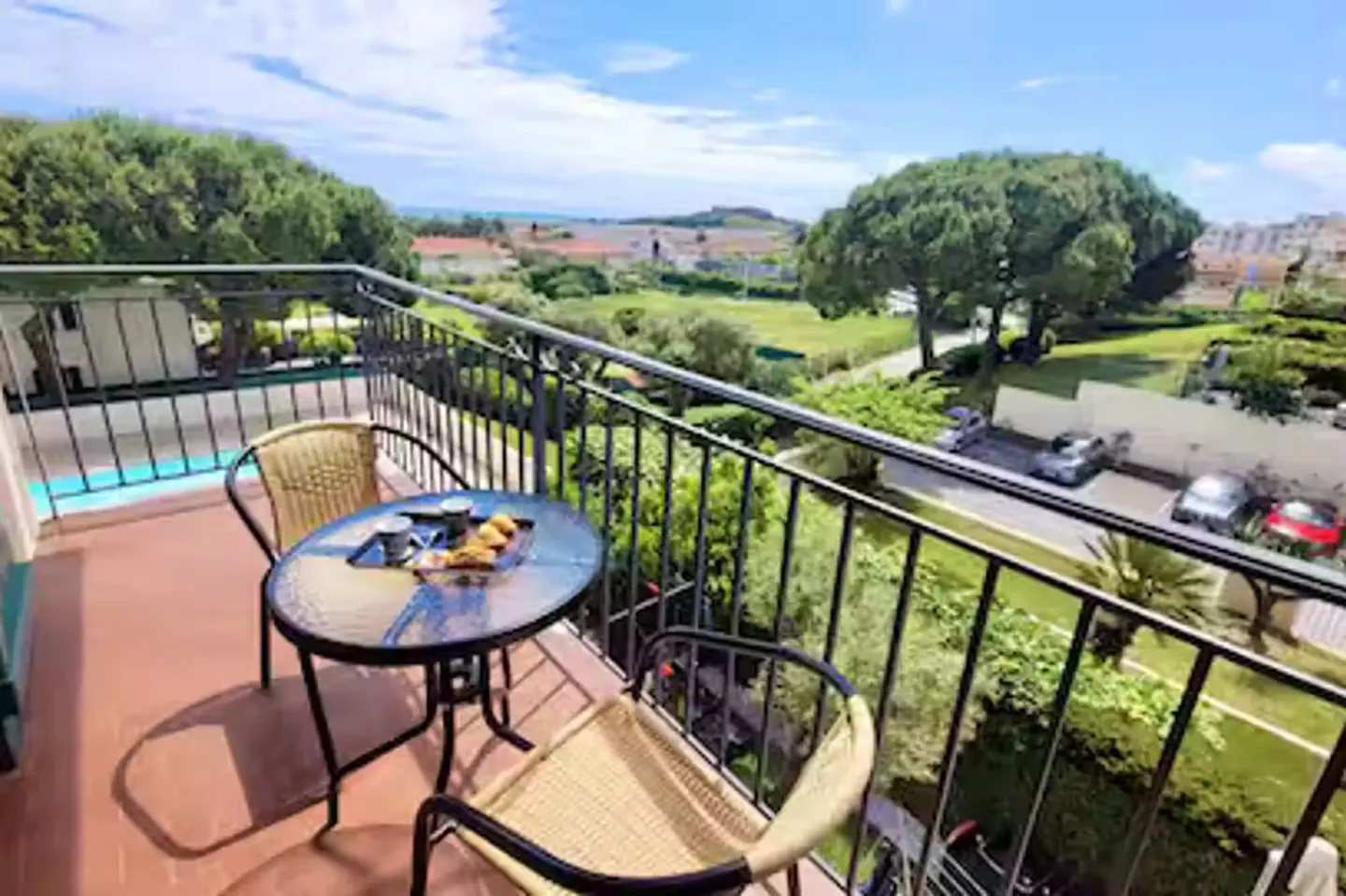
- Pay for professional photos: nothing else in your listing gives a better return. A property photographer captures light, space and features far better than a smartphone.
- Get the cover photo right: it is the one that appears in search results, your thumbnail. Pick the one that sells best (the view, a bright living room, the terrace).
- Tell a story with the order of your photos: a strong cover shot, then the living room, kitchen, bedrooms, bathroom, outdoor space, view and the best of the neighbourhood.
- Caption every photo: a short description (“South-facing terrace with sea view”) adds relevance and reassures guests.
- Show off natural light and storage: bright, tidy, clutter-free rooms always perform better.
A listing with dark amateur photos starts at a disadvantage that is very hard to overcome, however good the rest is. A professional shoot, on the other hand, can lift your booking rate on its own, and with it your ranking.
The description: inform and reassure
The description is your page content: it should answer guests' questions, include search keywords naturally and remove anything that might stop them booking. Make it easy to skim, because few people read every word:
- A clear opening line that sums up the main selling point and who the place suits (couples, families, business travellers).
- The practical details: how many it sleeps, the beds, key amenities (air conditioning, Wi-Fi, parking, washing machine), which floor and whether there is a lift.
- The neighbourhood and distances: how far on foot to the beach, transport, shops and sights (Promenade des Anglais, Croisette, Vieil Antibes). These are also keywords guests search for.
- House rules and conditions: set out honestly, so there are no unpleasant surprises leading to bad reviews.
Good SEO practice: use the words your guests actually type (“near the station”, “sea view”, “air-conditioned”, “town centre”), but never stuff keywords in. It makes the text harder to read and hurts you, just as it would on a web page.
Keywords and amenities: tick the right boxes
On Airbnb and Booking, a lot of your visibility comes down to filters. When a guest filters for “air conditioning”, “free parking” or “pets allowed”, only listings with those boxes ticked appear. Filling in your amenities list completely and honestly is a direct way to be seen, and one that is too often overlooked. Every amenity you leave out is a filtered search you miss.
On the French Riviera, focus on the amenities guests filter for most: air conditioning (essential in summer), parking (scarce and in demand), Wi-Fi, terrace or balcony, washing machine and self check-in. Be precise about how many it sleeps and the type of beds too, as these are major filters. The principle is simple: the more relevant filtered searches your listing qualifies for, the more often it is seen.
A free, tailored estimate in 2 minutes, with no obligation.
Reviews: what drives your ranking
If you remember just one long-term ranking factor, make it this one: reviews. The number of reviews, the average rating and how recent they are all carry huge weight. Better still, they feed themselves: good reviews lift the listing, which brings more bookings, which brings more reviews. It is the virtuous circle at the heart of short-term letting.
But reviews do not depend on the listing itself. They depend on the guest's actual experience, which comes down to how well the property is run:
- A warm welcome and a smooth check-in set the tone from the first minute.
- Spotless cleaning: dirt is the number one cause of low ratings, so hotel-standard cleaning is non-negotiable.
- Responsiveness 7 days a week: answering questions quickly and sorting out problems turns an average stay into a happy memory.
- An honest listing: a property that looks like its photos and matches its description avoids disappointment, the main cause of bad reviews.
That is exactly why optimising a listing and running the property well go hand in hand: the best listing in the world cannot make up for a sloppy welcome, and vice versa. A professional holiday rental management company takes care of both. It is also one of the three levers (with occupancy and average nightly rate) behind the income gains owners typically see. For more on this, read our article Is Airbnb management worth it?
Platform signals to work on
Beyond what guests can see, several performance signals have a direct effect on your ranking. They are about day-to-day management more than the listing itself, and this is where professional management really makes a difference:
- Response rate and response time: the platforms explicitly reward hosts who reply quickly, every time.
- Acceptance rate: turning down too many requests sends the wrong signal.
- Host cancellation rate: cancelling a confirmed booking is heavily penalised. Avoid it at all costs.
- Superhost status (Airbnb): it rewards consistency (high ratings, few cancellations, quick replies) with more visibility and a reassuring badge.
- A complete, current calendar: a calendar that is kept up to date and open, with no stale dates, ranks better.
- Responsive pricing: prices that move with demand show the platform your listing is active. This is where dynamic pricing comes in.
All of these signals need someone on hand at all times: replying within minutes, never cancelling, keeping the calendar up to date, adjusting prices. It is hard to keep up on your own for long, and it is the core of what a holiday rental management company does.
Your listing checklist
Run through this list for each of your listings. Every box you tick makes you more visible.
| Item | What to check |
|---|---|
| Title | Best features first, location, keyword |
| Cover photo | Professional, eye-catching, bright |
| Photo shoot | Complete, captioned, tells a story |
| Description | Easy to skim, natural keywords, distances, area |
| Amenities | Complete and honest, key filters ticked |
| Reviews | Volume, high rating, proactive handling |
| Responsiveness | Fast replies, high acceptance rate |
| Calendar and pricing | Up to date, open, dynamic pricing on |
| Multi-channel | Listed on Airbnb, Booking and other platforms |
How we do it: SEO applied to your listing
We do all of the above as a matter of course, because it is in our DNA. Azur Hébergements was founded by Anthony and Laura, specialists in SEO and finance respectively: we treat every property as a page to optimise and an asset to make pay. In practice, that means titles written to rank and win clicks, professional photo shoots, well-structured descriptions full of relevant keywords, complete amenities lists, dynamic pricing to keep the listing active, distribution across the main platforms and, above all, first-class day-to-day management (welcome, cleaning, responsiveness) that earns the reviews that lift the listing.
It is this mix of SEO know-how and careful day-to-day running that lifts a listing and fills it: in summer 2026, the properties we managed all season were booked 84% of available nights (« Saison 2026 Azur » report, Lodgify). It is all included in our 20% excl. VAT commission for full-service holiday let management, with no hidden fees. And our close knowledge of Nice, Cannes and Antibes shapes which keywords and features we put front and centre.
In short: your listing deserves a strategy
Optimising an Airbnb listing is not about cosmetics; it is about search ranking. Title, photos, description, keywords, reviews and platform signals work together as a system that decides how visible you are, and so how many bookings and how much income you get. Every lever counts, and the effects add up. A listing treated like a web page, backed by careful management that keeps the good reviews coming, gets booked more often, at better prices, all year round.
Curious what an optimised listing could do for your property? Estimate its potential with our income simulator, then hand your property over to us or ask for a free estimate. We will audit your current listing and show you, lever by lever and with figures, how much room there is to improve.
Find out more about the listings we optimise for our owners and our holiday rental management in Juan-les-Pins.